

Protected: Pat to Ida: 27 November 1943
January 2nd, 2009 · Enter your password to view comments.
Enter your password to view comments.Tags: food · health · Ida & Pat
Of Dodos, vinyl LPs, letter-writing, etiquette and Polaroid cameras.
January 1st, 2009 · 6 Comments
There are many things that are behind us, other than 2008. Some are in a constant state of sputtering back to life (see above, excepting Dodos), while others have been wiped from existence forever (see Dodos, above).
Not long ago, I visited a yard sale at the home of some friends. My bargain discovery was a Polaroid Sun 600 camera for three dollars. Three dollars (can you believe it?)!! Such a great deal, if it works. We shall see. I’ve decided that if I can get the camera operating and find some fresh film, then I’ll try my hand at “Polaroid art.” But one step at a time.
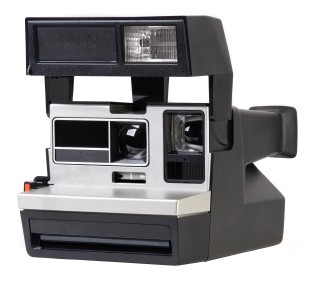
This morning I encountered an interesting column in the online New York Times. It seems that a small coterie of enthusiasts is struggling to revive the “dying” Polaroid camera culture, much like the vinyl LP culture has been kept alive by a new generation of music lovers not so easily seduced by the ease of digital technology.
The next few months will end an era that began six decades ago with a contraption called the Model 95 camera. That accordion-style machine delivered instant photography at a price tag equivalent to some $850 today. The SX-70, which spit out color prints, arrived in 1972. American life during the late 20th century had found its Boswell.
The demise of Polaroid’s instant film cameras has been coming for years. Digital technology did it in. The decision this year by the company that Edwin Land founded to stop manufacturing the film has left devotees who grew up with Polaroid’s palm-size white-bordered prints bereft. They have signed up in the thousands as members of SavePolaroid.com. Digital cameras that print instant pictures have materialized to fill the void, providing a practical substitute. But as in most affairs of the heart, logic is beside the point.
Read the entire article by Michael Kimmelman here.
In a search on the ‘net for Polaroid film, I discovered, in an FAQ page, that Polaroid cameras are powered by batteries included in the film cartridge, and not by batteries stowed somewhere in the body of the camera. Fascinating. Now I just need to find some.
On a somewhat related note, we were told as undergraduates at Harvard College that the Science Center complex was constructed to look like a Polaroid camera. It is indeed a known fact that the building’s construction was funded by Edwin Land, who invented the camera. But the story about its intended appearance is, according to online encyclopedia Wikipedia, untrue. However, one look at the building is enough to make wonder.

(photo: The Kidder Smith Images Project)
→ 6 CommentsTags: ideas · language · music · writing
Recipe: Chiles Rellenos Casserole
December 30th, 2008 · 7 Comments
The holidays are about traditions as much as anything else, and my family had a particular way to celebrate them. While I was growing up, our house was the evening stop on Christmas Eve for relatives and friends, who would congregate in the late afternoon and early evening for a meal centered on the contents of two very large pots on my mother’s stovetop. One contained pinto beans, soaked and seasoned for a couple of days, and piping hot. The other contained her wonderful chili, a crock-pot treatment of which I have perfected over the ensuing decades. The meal also had a few other key ingredients.
Tortillas? Check.
Sweet green chili cornbread? Check.
And the secret weapon…the chiles rellenos casserole.
It was a memorable feast that rarely happened more than once a year. It was no wonder that our house was the last stop of the day for most of the attendees; after that bounty, it was tough to move anywhere else but towards home. I can remember many a member of my extended family crapped out on their backs on the living room floor, moaning, for an hour or two after eating that meal.
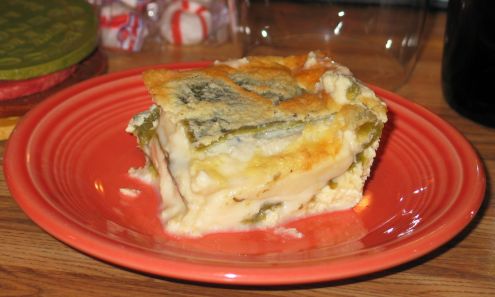
This year, I found myself in a position to cook the Christmas meals, and these feasts came immediately to mind. I had never made either the casserole or the cornbread, and decided to try them both. I am proud to state that the entire meal turned out beautifully and was a tremendous hit, and may very well have re-established my Mom’s Christmas Eve Mexican food feast as a new tradition in my house.
(photo: spitballarmy.com)
In the spirit of giving, here is the chiles rellenos recipe that I inherited from my mother, with my edits added in square brackets:
CHILES RELLENOS CASSEROLE de Dolores
Ingredients:
1½ lb. jack cheese
1 cup milk
3 eggs
3 tsp. flour
2 cans (about 7 oz.) whole Ortega green chili peppers [Next time, I will use three cans, just to pretend that I’m getting more green vegetables.]
a dash of salt
a dash of pepper
• Cut the cheese (!!) into strips about ¼ inch thick and 2 inches long. [You can play with that measurement, of course, as the cheese will melt while cooking.]
• Clear the seeds from the peppers. [I did not do this, as I like the taste of the seeds. These peppers are not jalapeño-hot, but have a roasted, rustic taste to them, and their seeds are not “the enemy.”]
• Cut the peppers into 3 thin strips. [I also suggest patting the peppers good and dry. I did not do this, and the water from the peppers made the first cut into the casserole really watery.]
• Put repeated layers of cheese and peppers into a greased 9″ x 9″ casserole pan. [Glass or Pyrex works best.]
• Beat the egg whites until stiff. [That’s not nearly as fun as it sounds.]
• Add flour, salt and pepper and beat.
• Add milk and egg yolks and beat again.
• Pour the mixture over the cheese and pepper layers in the casserole pan.
• Bake in the oven at 350 for 45 minutes. [I cooked my dish for close to an hour, which gave the top of the dish a thin, brown, crusty cheese coating that contrasted nicely with the soft texture of the body of the casserole. It tasted really good, too.]
• Let stand at least 15 minutes to allow setting.
• Cut into squares and serve with all of that other good stuff you’ve been preparing.
This dish tastes profoundly great with an icy bottle of Dos Equis, or a hearty and robust red wine.
I also found that if there is any left over the next day, it tastes great heated and rolled in a flour tortilla burrito-style. Yum!
For dessert – back in the “old” days – we would enjoy my Granny’s empanadas, which she stuffed with sugary refried beans. I know that sounds totally bizarre and unappetizing to anyone who’s never tried them, but it was one of the best things I’d eat all year until the following Chrismas or, maybe, Easter. Does anyone have a good and tested recipe for that?
→ 7 CommentsTags: family · food · house
Screenings: Mamma Mia! (2008)
December 29th, 2008 · 1 Comment
It made a ton of money in theatres and now that it has been released on video, everybody’s getting a DVD copy as a Christmas gift. Last week, I passed a wall of empty racks in the video store where their 96 copies had been sitting on release day. There were only four left. Reflexively, I grabbed one. Curiosity compelled me, mainly, but who doesn’t really have a soft spot for ABBA songs. Besides, I just had to know what all of the fuss was about, and if Pierce Brosnan really is a terrible singer. I rented it.
The first 45 minutes to an hour were nearly unendurable. Mamma Mia! follows the standard Hollywood musical formula, with characters singing a song where a mere sentence would suffice, in conveniently improbable settings. For example:
Harried Woman who runs a Greek resort hotel: I work so hard with very little rest or money, and I can’t seem to get ahead.
Her two friends, visiting the Greek resort hotel to attend the harried woman’s daughter’s wedding: What can we do to help you, Harried Woman?
Harried Woman: You can sing backup while I detail all of my mundane chores in a song!
[The three women sing a song, and dance while doing so, using scarves as props.]
Harried Woman looks out of a window and sees her daughter, who is standing atop a cliff, looking out to sea: (To her two friends) I can’t believe my little girl is getting married. It seems like only yesterday she was just beginning to walk. [Harried Woman sings a song about lost innocence. Daughter climbs over the balcony and into the room, with impeccable timing, to join Harried Woman in a duet of the song’s final chorus.]
Harried Woman and Daughter embrace. Daughter slips out of the room and, while running down the steps to a beachside cabana, sings a song about her love of running on steps.
And so on.
This film would have been completely without merit if not for the songs. Some clever person – Benny from ABBA, perhaps – decided that if he took two big handfuls of hit ABBA songs and shuffled them in an agreeable playing order, a plot connecting them would emerge. That’s what we do when we make a mix tape, isn’t it? And you can’t hate an ABBA song; when you proclaim your love of ABBA, you feel liberated, and if you say you can’t stand them, everyone knows you’re lying. So the best thing to do is give in. Just sing along, or rent the damn DVD.
I have a neighbor who absolutely loves this movie. I asked her once if she had seen it. “Twice,” she said. Not too long after that, the movie came up again in conversation. “You’ve seen it twice, haven’t you?” “Oh, no, I’ve been to see it three times in the theatre!” She got very animated about it. She held her hands to her heart. “I just love those songs! And Meryl Streep is wonderful!!” Ah, she’s been liberated. I nodded my head in silent acknowledgement.
Some time around Thanksgiving we were visiting and I told her the movie was coming out soon on DVD. “But you’ve already seen it a few times, haven’t you?” I asked. “Five times, maybe six,” she said. “That’s the only thing I’ve told people I want for Christmas. The DVD has a sing-along feature, so you can sing with the movie whenever you want to. Someone is bound to gift it to me; you should come over after Christmas and we’ll watch it!” A chilling cinematic image of me sitting on my neighbor’s sofa singing “Take a Chance on Me” at the top of my vocal capability ran across the screen in my brain. A shiver ran down my spine.
When I screened Mamma Mia! in the privacy of my own home last week, I engaged the sing-along feature. It raised the entertainment value of the film, but I still did not sing along. If it had had a bouncing ball, I couldn’t have resisted but, sadly, there was no bouncing ball to follow, just highlighted text.
The film continued to run, and my attention drifted. I started filing bills while listening to the (mainly) music in the next room. I’d walk into the TV room on a regular basis to see to which new scenic spot on the Greek island the singers had relocated. It was not until the very end of the movie, while the credits were rolling, that my attention was riveted. The young female star of the piece, Amanda Seyfried (the Daughter), was singing a solo acoustic version of “Thank You for the Music” with only a piano as accompaniment. It was lovely. It was, in fact, the best musical moment of the film, for me.
I jumped online and downloaded the song for 99 cents. Now, even though the rental DVD has been returned, I can sing along whenever I want to. It’ll be good practice, in case I get that invitation to watch Mamma Mia! again at my neighbor’s home.
→ 1 CommentTags: film · music · Screenings
The 2008 Top 10 List: music
December 28th, 2008 · 4 Comments
What an odd year for me and music. By that I don’t mean that it was an odd year for music (which it may have been), or an odd year for me, necessarily (though I might say that was true, as well). It was an odd year for me and music, together. For the first time in about twenty years, I wasn’t around the music “scene” every day, 24/7. All of the new music that I encountered, I had to seek out, after reading about it online or in the news, or it was recommended to me by friends and former colleagues…you know, the way that music discovery is supposed to happen. But, as a result, I was exposed to far less new music than in the past.
On July 1st, I wrote a post describing my five favorite CDs of the year, so far. On reflection – a very brief reflection – those five recordings are five of the best that I heard all year, and I rank them as such.
1. Kathleen Edwards – Asking for Flowers
2. Fleet Foxes – Fleet Foxes
3. Ry Cooder – I, Flathead
4. Teddy Thompson – A Piece of What You Need
5. Mason Jennings – In the Ever
Beyond those five albums, there are few that stood really tall for me, perhaps because those five got so much play that there wasn’t much more air time allotted for new CDs. But of the handful of other new recordings that I did spend quality time with, here are the ones that I intend to go back to again, and soon:
6. Toumani Diabate – The Mande Variations
7. Bob Dylan – Tell Tale Signs: The Bootleg Series, Volume 8
8. Q-Tip – The Renaissance
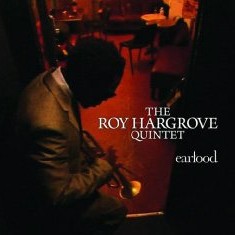
9. Roy Hargrove – Earfood
10. JJ Grey & Mofro – Orange Blossoms
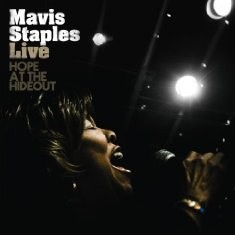
11. Mavis Staples – Live: Hope at the Hideout
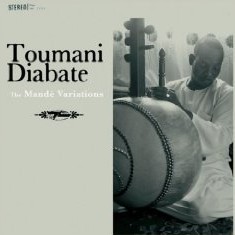
Toumani Diabate’s album, all solo kora (though Diabate’s intricate fingerwork makes one instrument sound like several), is graceful and dreamlike. I was introduced to him through his prior release, Boulevard de l’Independence, which used a full, and large, band to exhilarating effect, while often leaving Diabate’s individual performance buried in the mix. The solo setting of The Mande Variations allows Diabate room to stretch. I liken the album to Keith Jarrett’s Koln Concert; it also has the ability to whisk you away.
The following track is a good example of the overall tone of the album. Notice the Ennio Morricone quote at the beginning…gotta love that!
[audio:Toumani_Diabate___Cantelowes.mp3]
“Cantelowes” (2008), by Toumani Diabate
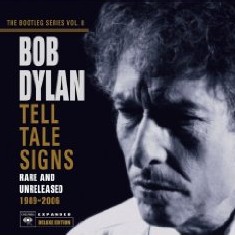
Dylan can do no wrong with me these days. I like the rough and tumble Dylan of Modern Times and the spooky, ethereal Dylan of Time Out of Mind. (Truth be told, I enjoy every Dylan, save the “Froggy Went A-Courtin'” Dylan, and the Grateful Dead Dylan. And you and I both know that there are an awful lot of Dylans, so that’s a darn good average.) Tell Tale Signs compiles two discs worth of previously unreleased material from the last decade or so. With so much material, you might expect a disjointed collection of oddities, but the flow between tracks sounds natural and unforced. I found the listening experience quite moving (and moody, in the most positive sense).
[audio:Bob_Dylan___Huck’s_Tune.mp3]
“Huck’s Tune” (2006), by Bob Dylan
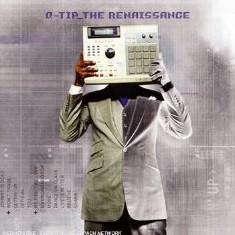
I’m not a rap or hip-hop connousieur, but I do like a handful of urban artists. I was introduced to The Renaissance through a suggestion by a friend on Facebook, which seems funny to me, but the world is indeed getting smaller – or “closer,” more accurately – through a myriad of electronic media. I am surrendering. Anyway, I really dig the beats and rhythms and overall ingenuity of the soundscape on the Q-Tip album. Though I haven’t penetrated the lyrics yet, I am pretty confident that he’s not singing about knifing ho’s or the size of his “gun,” so the sonic mix is a pleasure with no guilt at all.
[audio:Q-Tip___Johnny_Is_Dead.mp3]
“Johnny Is Dead” (2008), by Q-Tip
Hip-hop-wise, I also really wanted to like the new Streets album (Everything Is Borrowed) which, while infinitely better than his previous release, couldn’t hold a candle to his first two CDs. Sorry to say, I had to jump ship.
On the front and back covers of Earfood, trumpet and flugelhorn player Roy Hargrove is styling in a crisp suit and sunglasses, emerging from the shadows of what appears to be a late night club, looking like Miles Davis for all he’s worth. In his recording output, Hargrove shifts back and forth between a more traditional jazz style and an urban mode (for which he records under the moniker The rH Factor). I am a fan of the more traditional Hargrove, and two of my favorite jazz albums, Parker’s Mood and Roy Hargrove with the Tenors of Our Time, are cut from that cloth. Earfood follows in that traditional vein here, with a live texture that glides between suggestions of an after hours hard bop jam session to a romantic palm court reverie. About half of the numbers were penned by Hargrove.
[audio:Roy_Hargrove___Rouge.mp3]
“Rouge” (2008), by Roy Hargrove
Among other jazz releases this year, I also enjoyed French trumpeter Erik Truffaz’s Arkhangelsk. Truffaz enlisted British singer-songwriter Ed Harcourt to contribute lyrics and vocals to three tracks, a crossover effort that worked nicely (and gave me my Ed Harcourt fix for the year).
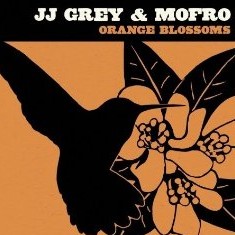
Orange Blossoms is a constant joy in the car. It’s great driving music. Whenever I’m listening to it, I feel like I could take a left turn (or a right turn, depending on which direction I’m headed on I-20) and cruise on down to FLA.
[audio:Mofro___Orange_Blossoms.mp3]
“Orange Blossoms” (2008), by JJ Grey & Mofro
I discovered Mavis Staples’ We’ll Never Turn Back a year late. Happily, I got served a double dose of it with the late 2008 release of a live concert recording, Live: Hope at the Hideout, which spotlighted many of the songs from the studio album. Collections of songs associated with the civil rights struggles of the late 20th century, both albums are packed with the energy and sweat you would expect to find in a packed evening church service somewhere in Mississippi, and maybe in Alabama, too. “This Little Light of Mine” is re-invented as a bump-and-grind on the live album, and Ry Cooder adds an irresistible choogling guitar riff to the studio album’s version of “99½ Won’t Do.”
[audio:Mavis_Staples___Freedom_Highway.mp3]
“Freedom Highway” (2008), by Mavis Staples
Each year there are always old recordings being heard anew in an improved format, or discovered for the first time (whether or not this was the year of re-release…the “rules” be damned!):
12. Graham Nash – Songs for Beginners
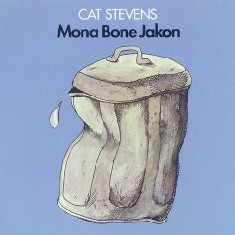
13. Cat Stevens – Mona Bone Jakon
14. The Manhattans – Sweet Talking Soul 1965-1990
15. The Lyres – On Fyre
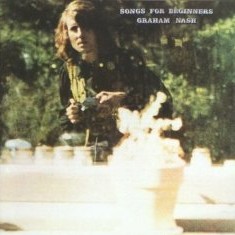
Brentski has already written on this weblog about the glut of fine re-issues released this year. I quite agree with him. One of my favorite re-discoveries this year was Graham Nash’s 1971 Songs for Beginners, remixed and sounding as if it were just recently committed to tape. I had a 45 rpm vinyl single of “Chicago” as a kid, but the flip side got much more play on my record player. It was “Simple Man.” At the time, I had no idea that it was a Joni Mitchell break-up song; I just thought it was a mighty moving melody. It sounds even better now.[audio:Graham_Nash___Simple_Man.mp3]
“Simple Man” (1971), by Graham Nash
Songs contains a coda to “Chicago” which, oddly, sounds as if it was tailor-made for the political happenings of the past year, with its chants of “We can change the world” and “Yes, we can!” I don’t think that Graham Nash would disapprove of that…haven’t we seen him out on the stump for Barack Obama?[audio:Graham_Nash___We_Can_Change_The_World.mp3]
“We Can Change the World” (1971), by Graham Nash
I can’t rave wildly enough about the amazing sound quality of this re-issue. I had passed it by as self-indulgent solo fluff as a young man, probably preferring the solo albums by Stephen Stills, with a mindset that one former member of a group had to be preferable to the others. What an utter, utter fool I was, to paraphrase Sir Noel Coward. Listen to the beginning moments of “Better Days” to hear what I’m talking about: at about 0:35, the band kicks in and you’d think they were in the same room with you.
[audio:Graham_Nash___Better_Days_(edit).mp3]
“Better Days” [edit] (1971), by Graham Nash
Sounds pretty good for an mp3 file, eh?
I was thrilled when A&M re-issued what I considered the two finest Cat Stevens albums – Tea for the Tillerman and Teaser and the Firecat – as Deluxe Editions this past Fall. That got me listening to some of his later albums again, in reassessment mode. I realized that I had never heard the album Cat had released immediately prior to those two, Mona Bone Jakon. After a quick download, I found myself listening to it repeatedly. I now count it among my favorites of his. You probably know “Trouble,” which was featured in the film Harold & Maude, but there are even better gems than that on Mona Bone Jakon.
[audio:Cat_Stevens___Maybe_You’re_Right.mp3]
“Maybe You’re Right” (1970), by Cat Stevens
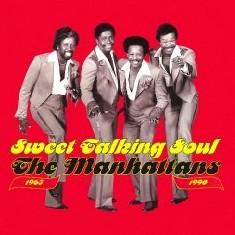
Philly Soul was another genre that I played a lot this year. The three-disc retrospective of the music of The Manhattans, Sweet Talking Soul 1965-1990, was one of my favorite new retro-R&B discoveries, along with Harold Melvin & the Blue Notes’ Wake Up Everybody and The O’Jays’ Ship Ahoy. And before you are tempted to point out my error: yes, I am aware that The Manhattans are not from Philadelphia. But did you know that they are from Jersey City, not New York City? Gotcha.
[audio:Manhattans___It_Feels_So_Good_To_Be_Loved_So_Bad.mp3]
“It Feels So Good To Be Loved So Bad” (1977), by The Manhattans
On one of the cassette tapes I found in my basement this summer labelled “Fred FM,” was a song by The Lyres entitled “Help You Ann.” I really liked hearing it again, but I no longer had the compilation CD it had been pulled from, so I went online in search of an entire disc of Lyres material. I found On Fyre, which collects the band’s recorded output from 1982. It rocks! and displaced JJ Grey’s Orange Blossoms as the disc du jour in the dashboard player of my truck. Here’s a sample of it, with my best wishes for a new year filled with great new tunes and enlightening musical discoveries.
[audio:Lyres___The_Way_I_Feel_About_You.mp3]
“The Way I Feel About You” (1982), by The Lyres
→ 4 CommentsTags: film · music · politics
Protected: Pat to Ida: 26 November 1943
December 27th, 2008 · Enter your password to view comments.
Enter your password to view comments.Tags: Ida & Pat
Protected: Millie to Pat: 26 November 1943
December 26th, 2008 · Enter your password to view comments.
Enter your password to view comments.Tags: family · food · Ida & Pat
Eric Cartman sings a shocking version of “O Holy Night”
December 25th, 2008 · No Comments
From Trinity College’s Religion in the News:
A mainstay of Comedy Central since 1997, South Park began as an exercise in vulgarity, with an emphasis on the scatological. “The round-headed protagonists may look like cruder versions of the ‘Peanuts’ gang, but ‘crude’ is the operative word,” sniffed Gail Pennington in an August 13, 1997 review for the St. Louis Post-Dispatch. “These politically incorrect, potty-mouthed little so-and-sos make Beavis and Butt-head look like good role models, and most of their jokes can’t be reproduced in a family newspaper.”
The most notable religious phenomenon in the early episodes was Mr. Hankey the Christmas Poo, an anthropomorphized turd who comes out of the toilet during the holiday season to bring presents to those—regardless of denomination—with diets high in fiber.
Early episodes also featured a local cable access show called “Jesus and Friends” starring host Jesus Christ; a boxing match between Jesus and Satan where Jesus gets beaten up and only wins when Satan takes a dive; and fat boy Eric Cartman being poked by a cattle prod every time he sings the wrong words to “O Holy Night.”
→ No CommentsTags: music · TV
Jesus Christ is Lord (Everywhere a sign #21)
December 25th, 2008 · 1 Comment

(photo: Spitball Army)
Matteson’s Flower Shop in Leucadia, California.
Photographed on 21 December 2008, 9:56 a.m.
→ 1 CommentTags: signs
Henrietta and Myrna wish you a flat affect Christmas.
December 24th, 2008 · No Comments
“So, as Henrietta and Myrna are gonna sing, I wish you a merry Christmas, a blessed Christmas and, most of all, a happy Christmas…God richly bless you!”
Thanks, Stu, for the link!
→ No CommentsTags: music
