Scott Hicks, who directed the film Shine (about pianist David Helfgott), has spent the last few years creating a documentary portrait of composer Philip Glass. It has just begun appearing on the film festival circuit. If the promise shown in this trailer for the film is any indication, the movie will be wonderful. Sidewalk Film Festival, are you listening?
Thankfully, there appears to be a broad humorous and very human streak running through the film. Check out Superkid falling off the couch at 1:35 (in the presence of Ravi Shankar) and that hilarious knock-knock joke that I hadn’t heard in years! This should be a fun film, and a worthy companion to Looking Glass, another documentary about Glass.
Tags: film · music
The text from my momentous 100th spam comment follows:
Hi !!!
The Pleasing text and design!
Excellent forum, added to favorites!
[link]
[link]
The Good lad an author! I much like site!
Wow! Good resources here, Enjoyed the visit!
Easy to find helpful information.
Easy to find helpful information.
[link]
[link]
[link]
Easy to find helpful information.
The Regard! The Excellent forum! Thank you!
[link]
[link]
The Pleasing text and design!
I am glad to find this forum!
Wow! Good resources here, Enjoyed the visit!
The embedded links in the comment all use words that describe pharmaceutical products to aid in weight loss and improve sexual performance. As if I needed to be buttered up with compliments about my blog to agree that either of those concepts are good ideas…
I am extremely proud of this achievement. What shall I aim for next, I wonder?
Tags: language · Uncategorized
From today’s New York Times:
In 2005, Starbucks looked like it was going to do for undiscovered music what it had done for the nonfat latte. The company decided to stock “Careless Love,” a CD of sophisticated pop-jazz songs by Madeleine Peyroux, who had attracted only a modest following in this country, plying her craft in small bars. Ms. Peyroux soon found herself at No. 81 on the Billboard chart, and has become a mainstay of jazz.
Starbucks was betting that its eclectic taste played to the upscale atmosphere of its coffee shops, where it enticed customers to pay $4 for their daily caffeine fix. And record companies saw Starbucks at the vanguard of a new class of unconventional sales outlets that could keep the CD alive in an age of digital downloads.
But the ardor for Starbucks has gone the way of yesterday morning’s grounds. Critics in the music industry say the company squandered its cachet by mismanaging the effort to broaden its music mix. The choices that reflect its early taste for the offbeat — like an album from Lizz Wright, a torchy pop singer — are now squeezed in with offerings not unlike those at Wal-Mart, including the latest releases from Alicia Keys and James Blunt. The shift has not been lost on some customers.
The music offering “is more popular now,” said Hazel Delgado, 33, a social worker and Starbucks regular from San Bernardino, Calif., who attended a recent concert presented in front of one of its coffee shops by another act on the company’s label, the singer Sia. “I want to come in and be surprised,” she said. “If they do get more mainstream, why bother?”
Along the way, Starbucks has alienated business partners who contend that it has demanded too big a cut of music revenue. The company’s shift in direction has also prompted upheaval within — including the departures of half a dozen senior executives from its entertainment unit.
Starbucks, of Seattle, said its music sales are healthy: it reports selling 4.4 million CDs in North America last year, up some 22 percent from the year before. Still, it opened hundreds of shops in the same period, increasing stores in the United States by 18 percent.
Despite adopting a broader musical approach, Starbucks on average sells only two CDs a store each day at company-owned shops, according to people briefed on its business. Starbucks disputed that figure but declined to provide a different one.
Read the full article here.
Tags: music
March 16th, 2008 · 1 Comment
Late February, 1995.
New York City.
The Metropolitan Opera House.
I arranged a trip to The City to celebrate my birthday weekend with a friend. My arrival a night early was scheduled to attempt attendance at The Met, no matter what the opera was. It turns out that the company was performing Der Rosenkavalier, and I was able to purchase a seat. Lofty seat, that, at what seemed like the highest point in the house, immediately stage right with about a 67 percent view of the stage. No matter, it was all about the experience.
At one of the three breaks between acts, I took an exploratory excursion down the many staircases that spiraled toward the basement. The Met, between acts, is one big 15-minute speed-party out in the lobbies, and all of the people are beautiful. My inner voyeur found it nearly as entertaining as the opera. I tried to spot celebrities, but saw none. Budgeting time for the climb back to my aerie, I went in to use the basement men’s room.
Business done, I headed out of the bathroom. Upon opening the exit door, I found myself face to face – actually, face to chest – with a tall, elderly man in professorial dress, sporting a lengthy growth of white beard. I immediately recognized his face from the dust jackets of several books in my library as belonging to the writer Robertson Davies.
“Mr. Davies,” says I.
He stopped and stood like a wall in front of me. While I fumbled to say something else, he silently assessed this person who was blocking his passage to relief.
“Fifth Business is one of my very favorite books,” blurts I.
“Oh?” He paused. “Why?” says he.
And I found myself in an extremely awkward situation, blocking traffic both into and out of the men’s room at the Metropolitan Opera House during the speed-break, trying to conjure a brief reply to Robertson Davies’ essay question. I blurted out my response, much too quickly for a poetic interpretation, but certainly at a pace where he could recognize the words, which were from the first chapter of his book.
“Our village lacked the dignity of outskirts.” The words cartwheeled out of my mouth and clattered on the tile floor by my feet while the rest of the world stood still around us.
His brow raised slightly, and he looked directly at me. “Thank you.” He then excused himself and walked around me into the restroom.

(photo: Nancy Crampton)
Our village was so small that you came upon it at once; it lacked the dignity of outskirts. I darted up the street, putting on speed, for I had looked ostentatiously at my new Christmas dollar watch (Percy had a watch but was not let wear it because it was too good) and saw that it was 5:57; just time to get indoors, wash my hands in the noisy, splashy way my parents seemed to like, and be in my place at six, my head bent for grace. Percy was by this time hopping mad, and I knew I had spoiled his supper and probably his whole evening. Then the unforeseen took over.
– from page two of Fifth Business, by Robertson Davies
Tags: books · fiction · music
March 15th, 2008 · 1 Comment
Last year, the Metropolitan Opera in New York began what is perhaps best described as “opera outreach” by sending live broadcasts of performances to hundreds of movie theaters throughout the world. Here in Birmingham, we are among those fortunate to see these shows on a big screen, even though the theater that hosts them is well outside the city limits in Trussville. There is not, in fact, a movie house in downtown Birmingham at all, but that should be a topic for another day.
This afternoon, two friends of mine coaxed me into attending the simulcast of the Met’s new production of Peter Grimes. I have never listened to this opera – what many consider to be Benjamin Britten’s masterpiece – on record or CD, and did not even know the plot, other than that the setting was a seaside fishing village and it involved a trial. It has also been years since I have attended a live opera performance, though I feel that the ones I have been fortunate to see have been magnificent productions: Puccini’s La Boheme and Turandot at the Opera Company of Boston (prior to its closing in 1991) and Richard Strauss’ Der Rosenkavalier at the Met in the mid-’90s. There have been locally-produced opera stagings here, too, but this was in several ways a “new” experience for me.
Here are some of my impressions of the event:
– The Met production of Peter Grimes is dark. I don’t mean that the themes were full of gloom (even though that is fair to say). I mean that, apart from the final scene, the lighting was dim, the sets were various shades of black and gray, the costumes muddy and stifling. This served the story well, and I felt oppressed just watching the screen.
– The singing by the leads was outstanding, especially Patricia Racette in the role of Ellen Orford, and Anthony Michaels-Moore as Captain Balstrode.
– The simplicity of the set allowed a stronger focus on the story and characters, but without the constant benefit of a full-stage view, I was unable to notice when the architecture of the set changed. This may have been attributable to the darkness of the stage…did I already say that it was dark?
– Britten’s orchestral writing was breathtaking. The long musical interludes between scenes within the acts was an imaginative device, conjuring mental images of the landscape or a storm at sea. I am now on the hunt for the suite of music (“Four Sea Interludes”) drawn from the opera.
Ultimately, one of the more entertaining aspects of this viewing experience was the audience around me. Have you ever been to a horror film where people in the audience shouted at the screen? “Turn on the light!” “Run!” “Don’t open the door!” Over the years, I have grown to enjoy horror flicks less and less, but I always enjoyed that aspect of seeing them in a theatre – the communal feeling of watching the movie with people who were involved with it as much as you were (and not talking on their cell phones). At Peter Grimes today, at the end of each act, many audience members in the movie house began applauding. I have heard people clap at the conclusion of a good film (rarely in Alabama, but often in Boston). I have done so myself. And I have applauded at live music performances, as is appropriate. But this applause was a bit unusual for a movie house. First, it went on for a long time. It could have been that the audible applause from the Met encouraged the people around me to continue. Then, at the curtain call, the singers came out individually and the Met audience clapped their approval, measurable by the loudness of their clapping. The audience here did the same. How odd that was, as if they were trying to communicate their admiration for the performance to the shadows on the screen.
What is the purpose of applause, anyway? At a live performance of any kind, it serves to let the performers know that their work is appreciated. In the absence of live performers, it is an acknowledgement to one’s fellow audience members (That was terrific! Yes, I liked it, too!!). Or it is a statement of individualism, that one has good taste, that “I can appreciate high art” (like the fellow in the third row at the symphony who shouts “Bravo!” before the conductor has lowered his baton). Vigorous applause at a screen of projected light and shadow seems mostly wasted, however, without an artist present to hear it. To preserve the audience’s efforts, someone at the theatre ought to take a measurement of the applause and send it to the Met. Sample reportage: “Anthony Dean Griffey’s Act 3 mad scene garnered a 79dB response from the Trussville audience, a favorable rating of roughly 6.78 out of 10, compared to the national average of 8.29.”
How helpful it would be if, near the end of a film screening, the audience would stay in their seats through the closing credits and clap or boo their opinions of the cast members, script writers, cinematographers, casting agents, even locations. Now, that’s your test audience!
Tags: film · ideas · music · Screenings
Tags: language
My late morning visit to the 1st Avenue North post office today should have been uneventful and benign. After all, I was just dropping off a half-filled tub of mail that had already been posted, and there was no business to transact other than picking up a replacement tub.
As I approached the short line (two people), I passed a man in sweat pants and a faux-letterman jacket with the Chrysler emblem embroidered on the back, leaning over the “accessory” rack examining different packing envelopes. I stepped right into the next place in line. Apparently, that place belonged to the Chrysler Man. I was informed of this as he pushed me aside and stepped directly in front of me. At the same time, he began muttering epithets at me ranging from “bitch” to “cracker” to “peckerwood.”
“Excuse me?” I remarked, not really meaning it. I had heard very clearly what he had said.
That really set him off. (How dare someone take issue with being called names for no good reason.) “Don’t you look at me! I can take you!! Just keep looking at me, ‘ho’! I’ll cut you!”
I was in shock. I could hardly believe what I was hearing! Chrysler Man was acting like some teenage street punk, but he was clearly pushing 70 years of age. He was having to lean on the counter just to stand up. I figured that if he actually did have a knife, the time it took him to put his hands on it would easily allow me enough time to either get out of the way or take him down. I kept my eyes on him. “Take it easy, you old fool.”
“You just keep lookin’ at me, bitch. You think I can’t take you? I’ll cut you good, motherfucker.” Et cetera. Chrysler Man was spewing this garbage in an unending torrent.
The one woman working behind the counter was watching the entire exchange and, as Chrysler Man approached her station, she was cheerful and helpful. He bought over $300 worth of money orders from her. They were just lovely to one another.
Chrysler Man hobbled away and I approached the counter. The clerk was over-the-top nice to me, and I have dealt with this particular woman before – she is usually not the ideal of friendly customer service. She could have just been having a good day today, but to me it seemed like over-compensation. I gave her my mailings, and asked for and took a Priority Mail flat rate box. By way of apology, I think, she said “Next time, you can just leave the tub here on the counter, and you don’t have to wait in line.”
Later, I thought this: I have just been threatened with physical harm on federal property. There has got to be a special law against this. If I had my cell phone on me, and had been lucid enough (that is, not in a state of shock), I would have immediately telephoned the Birmingham Police. Why didn’t I just borrow the postal clerk’s phone? Better yet, when she heard one of her patrons threaten another with physical violence, why the heck didn’t the postal clerk telephone the police herself? It hardly matters that Chrysler Man was barely able to stand up on his own. Shouldn’t we all assume that every personal threat of violence is worth its face value, even when it comes from an unlikely source? Perhaps a uniformed law enforcement figure confronting Chrysler Man regarding his vitriolic statements would have brought him to his senses, but I doubt it. I totally missed my opportunity to perform an important civic duty, and I regret it deeply.
As I walked out of the post office, Chrysler Man was standing by his shiny, waxed, burgundy SRT8. “Cracka’ ass sonnabitch. You come over here, motherfucker, I’ll cut you up, asshole.” Presumably, Chrysler Man has spent the last 70 years of his life providing an example to the youth of his community, and contributing his share to Birmingham’s exalted ranking as America’s 6th “Most Dangerous City.”
I flipped him off – my only immediately available non-verbal defense – and drove away, leaving Chrysler Man’s hateful scowl and mutterances behind in the federally-managed parking lot.
Tags: language
March 12th, 2008 · 1 Comment
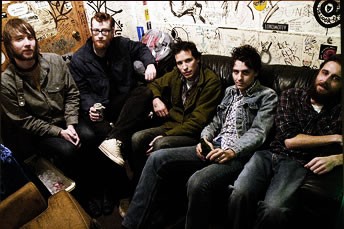
One of the best Alabama bands on the current scene has a new record release in the coming months, and they want you to hear it NOW for kinda free! The Dexateens’ record label, Skybucket Records, is offering Lost and Found as a “U-pay” download for a limited time at its website. While there, you really ought to also get Hardwire Healing, the band’s 2007 release, ’cause it’s mighty mighty good. For fans of ROCK & ROLL, the Drive-By Truckers, the Stones, and for Winston Smith.
Here’s a taste:
[audio:Dexateens___Enough_of_Nothing.mp3]
“Enough of Nothing” from Lost and Found
Tags: music
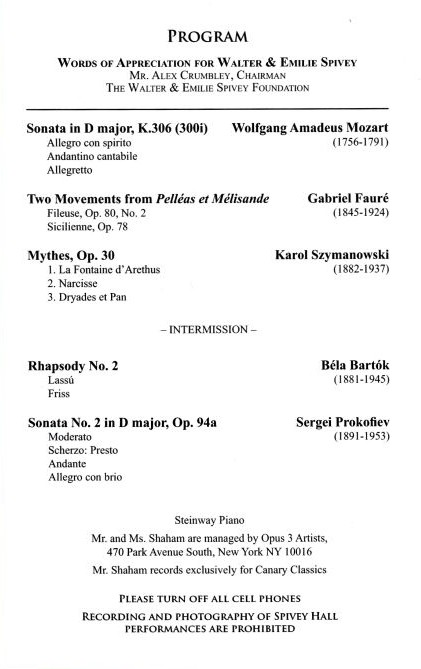
Whenever I have the opportunity, I attend a live performance by Gil Shaham. His concerts are reliably musical, programmed intelligently and, generally, flawless. I have been following his career for over 15 years now – attending one of his recitals has the air about it of catching up with an old friend.
For this Atlanta-area recital on February 16th, Gil partnered with his pianist sister, Orli. The pair have recorded Mozart’s entire piano & violin literature for video, so they eased comfortably into the evening with the K. 306 Sonata in D major. At the conclusion of the piece, Orli rose from the piano and addressed the sold-out audience with her familiar voice.
Familiar because since 2006, Orli has been the host of the entertaining but much too short NPR classical music segment entitled “Dial-A-Musician,” in which she calls up her musician frends while on the air and asks them questions such as “Why do the musicians in the string section bow in the same direction at the same time?” The fresh take on such mundane queries is fueled by Ms. Shaham’s obvious love of the subject matter and enthusiasm for sharing it with others. That spirit was clearly in evidence as she described the imagery and purpose behind the Faure and Szymanowski pieces that ended the first half of the program. She attempted to engage her brother into the presentation, but he would merely nod and smile, allowing her to work the crowd as effectively as she does with millions weekly on the radio.
The second half of the program was a workout of timing and finesse. The jagged lines of the Bartok were complemeted by the singing melodies and rhythms of the Prokofiev Second Sonata, a piece that Gil and Orli have had in their performing repertoire for several years.
You can tell the true acoustic of a performance space by how good the applause sounds: at the close of the Prokofiev Sonata, Spivey Hall was filled with the enthusiastic and thunderous pealing of hand claps, the sound clear and invigorating. The pair played one encore in acknowledgement, introduced by Gil in a rare spoken moment as Faure’s setting of “Clair de lune.”
Tags: music
In conversation today, I was attempting to find a word – just one word – to describe my impression of someone who has been in my acquaintance for about 10 years. Not a friend, mind you, but a person who I had dealings with professionally. Is he a “sarcastic” person? No, there was not that tinge of maliciousness about him, necessarily. He didn’t seem to like himself very much, and was often self-deprecating in a strangely humorless way.
I thought of the word “sardonic,” but wasn’t convinced that it was the right word. So, while still in conversation on the telephone, I Googled “define sardonic.”
What an unbelievably 21st century thing it is to be able to check and verify one’s ideas on a computer before uttering them in a conversation. That is either progress or a sign of the decline of civilization. In the 20th century, I would have had to actually speak the word “sardonic” and grit my teeth hoping that it was the right word – not knowing if it was, of course – and opening myself up to the ridicule of my opportunist conversational partner.
It turns out that my instinct was pretty right on, though. Google offered me two definitions. The first, rather dry, definition came from Princeton
(adj) sardonic (disdainfully or ironically humorous; scornful and mocking)
and was followed by a couple of examples in context. The second, from a website for the Classics Department at Washington and Lee University in Lexington, Virginia was more suitable.
Sardonic–characterized by scornful derision or bitter irony; mocking; cynical;
Followed by the “kicker”
said to derive from the Latin word for a Sardinian plant which, when eaten, was supposed to produce convulsive laughter ending in death!
YES!!
He is sardonic, all right. (That is the kind of thinking that will surely hasten my arrival in hell.)
Further searching generated the following etymological information from allexperts.com:
The Greek word “sardonios” or “sardanios” (as an adjective) and the neuter noun “sardonion” or the feminine noun “sardane” refer to a Sardinian plant which when eaten was supposed to produce convulsive laughter sometimes ending in death. This word was certainly known to Homer and later we read these terms in Pausanias, traveller and geographer of the 2nd century AD. In Latin also we have “Sardinia herba” (Sardinian herb) and “Sardonicus cespes” (Sardinian turf) both meaning: “Sardinian plant with a bitter taste which is said to produce facial convulsions which resemble laughter.” Hence the meaning “sardonic,” i.e. mocking, cynical, sneering, sarcastic, ironic, caustic, satirical.
Finally this plant was called “Ranunculus bulbosus” (bulbous buttercup) and “Ranunculus sceleratus” (cursed buttercup) by Linnaeus.
The cursed, bulbous culprit appears thus in the wild

and can be found EVERYWHERE (all the areas in green) in the contiguous United States…so beware! Lord knows, you don’t want to die of your own bitter laughter, as that Joe I was trying to describe will likely do one day.

Tags: language


